Student Bloc Challenges Vučić in Serbia's Tightest Parliamentary Race
The Novi Sad disaster and a 150,000-strong rally frame a contest between a single leader and a collective of non-political experts.
By Kwame Silva ·
Serbia heads to the polls this Sunday for parliamentary elections, where analysts predict an extremely close outcome. The race pits President Aleksandar Vučić, who has led the country in various capacities since 2012, against the Student List, a political force emerging from nearly two years of anti-corruption protests. This contest marks a shift in Serbia’s democratic history, pitting a long-serving executive against a student-driven movement with no traditional hierarchical structure.
The Student List originated after 16 people died when a canopy collapsed at a railway station in Novi Sad. Rather than selecting candidates through party machinery, student assemblies at university faculties chose 250 nominees. The list is headed by Ilija Srdanović, a cardiologist and professor at Novi Sad University. Srdanović is not the movement's leader and may not become prime minister even if the group wins. The candidate pool includes academics, athletes, economists, and engineers, none of whom have prior political experience.
Vučić, who stood down as president last month to run for prime minister, maintains strong support among voters who view him as a defender of national interests. He points to economic growth and infrastructure development over the past decade as evidence of his effectiveness. However, he has characterized the student movement as foreign-backed and intent on dismantling the state. The Student List and its supporters argue that Vučić and his Serbian Progressive Party dominate state institutions and media. An International Election Observation Mission report from 2023 cited an overwhelming ruling party advantage driven by media bias and the misuse of public resources.
The Novi Sad disaster remains Vučić’s most pressing political liability. The station renovation was part of his flagship high-speed rail project connecting Belgrade and Budapest. Magda Anastasijevic, an Eastern Europe analyst at ACLED, noted that while Vučić previously survived crises by identifying scapegoats, he could not distance himself from the canopy failure. A pro-government camp has occupied a central Belgrade park for 18 months, and its residents have attacked journalists, a situation Vučić describes as a symbol of resistance.
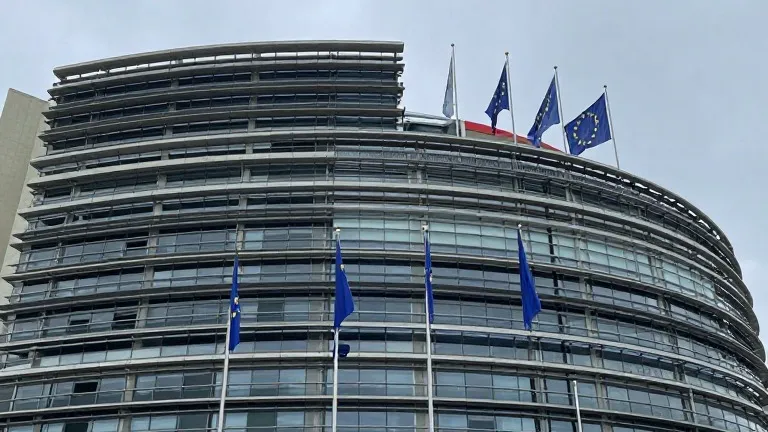
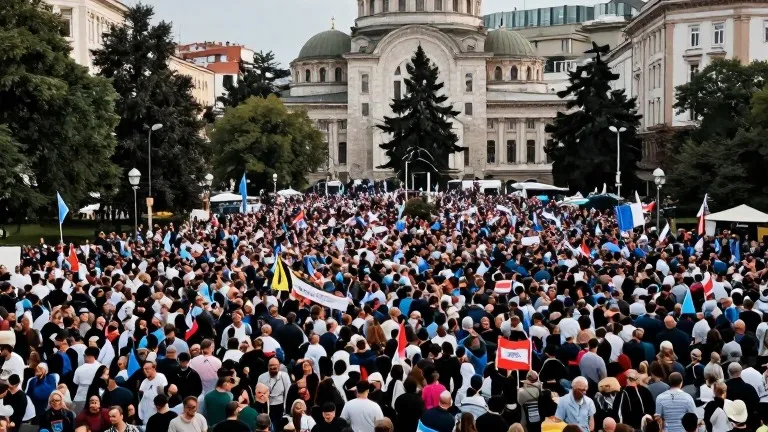
Foreign policy has also shaped the campaign. Serbia continues EU membership talks while maintaining close ties with Russia and China, neither of which recognizes Kosovo's independence. Vučić has warned that these links could be severed under a Student List government, asking at a rally if the group would sanction Russia. The contrast between the two sides was stark in the final days of campaigning. The ruling party filled Belgrade Arena with Vučić as the sole speaker, while a reported 150,000 people gathered in Slavija Square to hear from student candidates.
A student at Novi Sad University, identified only as Aleksandra, described the candidate selection as a strength, stating that the group gathered the best people in their fields. The election forces voters to choose between a centralized leadership model and a collective approach managed by non-political professionals.
More Politics · World news · Report a business · Got a Story?