Federal Court Allows Justice Dept. to Block Evanston Reparations
The intervention challenges the city's $25,000 housing grants as the administration targets race-based local initiatives.
By Lina Lewis ·
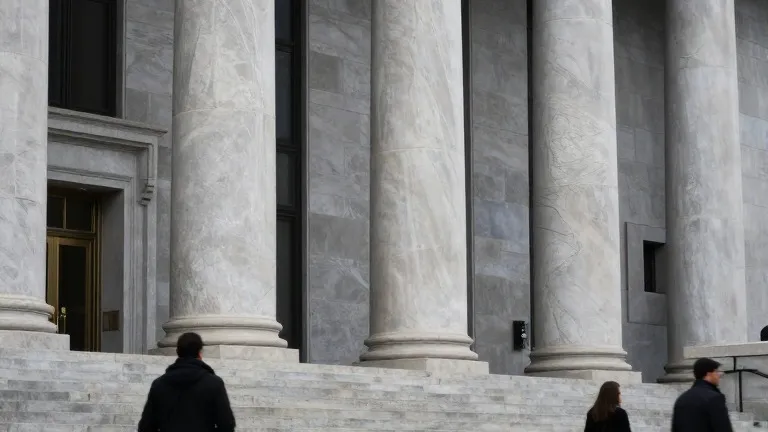
A federal judge in Illinois permitted the Justice Department to intervene in a lawsuit challenging Evanston's reparations program. The department joined the legal challenge this month, arguing that the city's $25,000 housing grants violate the 14th Amendment and the Fair Housing Act. This move marks a direct federal intervention in a local policy that advocates say has become a model for other cities.
The Justice Department alleges that Evanston distributes funds based on race without identifying specific historical harms. Michael Bekesha, the attorney representing the plaintiffs, stated that the Constitution prevents governments from picking winners and losers entirely on racial lines. Kiersten Pels, a department spokeswoman, called race-based government benefit programs unconstitutional. The legal team argues that the program's structure creates an equal protection issue under federal civil rights law.
Robin Rue Simmons, who now goes by N'nanba, helped design the Evanston grants for Black residents affected by discriminatory housing policies. She has since worked to expand this framework to more than 100 communities across the country. Simmons chairs Evanston's Reparations Committee and served as a city councilwoman. She described federal redress as the group's collective north star, noting that the current administration presents many barriers to that goal.
The federal push coincides with a wider national and international debate on reparations. In March, the U.N. General Assembly passed a resolution describing the trafficking of enslaved Africans as the gravest crime against humanity. Over 120 countries supported the measure. The United States, along with Argentina and Israel, voted against it, while 52 nations abstained. The resolution urged member states to consider reparations for the trans-Atlantic slave trade.
President Donald Trump has voiced opposition to reparations efforts. In a speech last month, he told supporters that advocates wanted to steal their money for the cause and that the movement was going nowhere. William Darity, a co-author on reparations literature, noted that no president has fully supported comprehensive Black reparations. Darity observed that Trump now speaks the word but does so with hostility.
The administration's legal and rhetorical pressure has affected institutions beyond local governments. Harvard University fired the team that identified nearly 500 living descendants of people enslaved by its past leaders. This dismissal occurred days after the president issued an executive order targeting diversity, equity, and inclusion programs in January 2025. Richard Cellini, who led the Harvard project, said new work in higher education has stalled since the order.
Georgetown University continues to offer admission consideration to descendants of enslaved people associated with its history. Kirt von Daacke, a historian at the University of Virginia, reported seeing no new scholarship programs at universities since the president returned to office. Despite the administrative shifts, some individuals are receiving financial support. Juan Woolfolk, a 36-year-old student at Southern University at New Orleans, is using a $10,000 Georgetown scholarship to study museum studies.
Virginia Theological Seminary also provides annual cash payments to descendants of people who labored on its campus. The funding comes from an endowment that has grown from $1.7 million to $2.8 million since 2019. In Evanston, Joe Martin, a 46-year-old flight attendant, received one of the city's housing grants. Martin said the government is reacting negatively to a legitimate program, comparing the situation to the unfulfilled promise of 40 acres and a mule.
More Politics · Georgetown news · Report a business · Got a Story?