Musk Counters NASA Panel's 22-Starship Estimate for Moon Mission
The SpaceX chief argues six to eight tanker flights suffice for the 2028 Artemis IV crewed lunar landing, rejecting a higher figure cited by a safety advisor.
By Lina Lewis ·
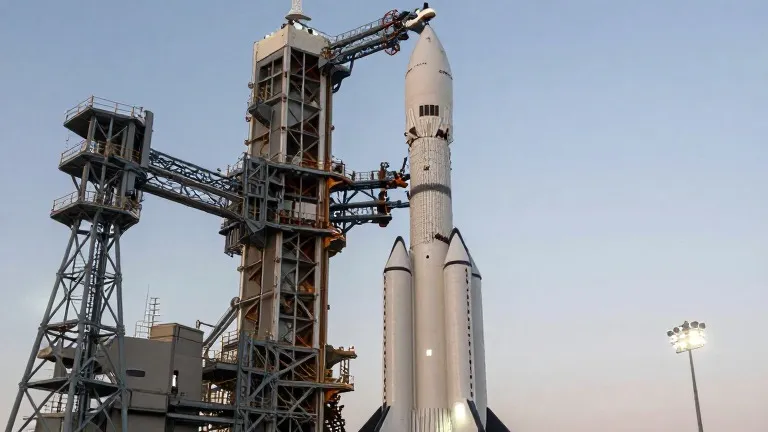
Elon Musk rejected a recent estimate from a NASA advisory panel regarding the number of Starship launches required to fuel the company's lunar lander. The dispute centers on the logistics for Artemis IV, the mission scheduled to land astronauts on the Moon in 2028. Musk asserts that the actual requirement will be significantly lower than the figure presented by government officials.
The disagreement surfaced during the Aerospace Safety Advisory Panel's quarterly public meeting held Thursday. Panel member Charlie Precourt, a former NASA astronaut, identified the refueling process for the SpaceX lander as a primary risk for the upcoming mission. Precourt noted that the most recent internal estimate suggested around 22 flights would be necessary to fill the orbital depot. He urged the agency to maintain close oversight of these required fueling operations.
The comment drew a direct response from Musk after Ars Technica reporter Eric Berger shared Precourt's remarks on X. Musk characterized the 22-flight figure as too high, stating that the real number would be closer to six or eight tankers. This position aligns with previous statements he made in 2021, when he described a 16-launch government estimate as extremely unlikely and predicted a maximum of eight tankers would be needed.
The technical basis for the conflict lies in how Starship operates in low Earth orbit. The rocket consumes nearly all its propellant just to reach orbit, meaning it cannot travel to the Moon without additional fuel. SpaceX's proposed solution involves launching a Starship configured as a storage depot first. Subsequent tanker Starships then fly to the depot, dock, and transfer their remaining propellant. Once the depot is full, the lunar lander launches, docks, refills, and departs for the Moon.
The total number of launches impacts mission cost, timeline, and safety. Each tanker flight represents a full rocket launch, adding time and potential for mechanical failure. Berger calculated that even with a launch rate of two Starships per week by late 2027, filling a depot based on the 22-flight estimate would take approximately three months. The discrepancy in numbers stems from different assumptions about vehicle capability. NASA's estimate appears to rely on current Starship lifting capacity, while Musk's lower range assumes a more capable future version.
Precourt acknowledged that Artemis IV involves a large number of firsts for the space program. He commended NASA Administrator Jared Isaacman for working to clear obstacles for both SpaceX and Blue Origin. Blue Origin's Blue Moon lander does not require orbital refueling for its initial mission, offering a different approach to the same lunar goal.
SpaceX plans to perform the refueling operations using its upgraded V3 Starship hardware. The final number of tanker flights will depend on how much propellant each vehicle delivers to orbit and how much is lost to boil-off during the transfer process.