Vucic Bids for Prime Minister Post as Half a Million Voter Entries Lack Addresses
Serbia's October 25 ballot follows the resignation of President Aleksandar Vucic and the rise of a student-led opposition list.
By Lina Lewis ·
Aleksandar Vucic is seeking the prime minister's office in Serbia's October 25 parliamentary election after resigning as president in late September to avoid running for a third term. Vucic, who led the country for fourteen years and previously served as prime minister from 2014 to 2017, heads the ruling party into a contest against an opposition list formed out of student protests.
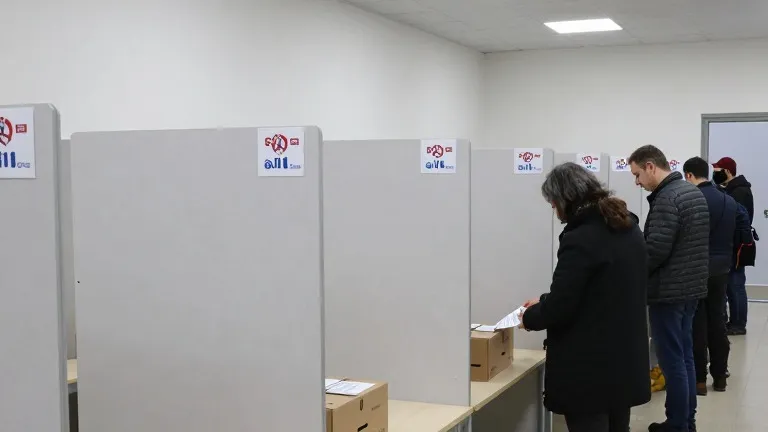
The campaign has turned on questions about how the vote will be run. RFE/RL's Balkan Service found roughly 500,000 registered voters whose records carry no complete address, with street names or house numbers frequently absent. The same review listed hundreds of voters at social welfare centers or at residential addresses that could not hold so many people.
The count includes voters registered in Bosnia and Kosovo. Four employees at Serbia-funded institutions in Kosovo told RFE/RL they had been pressed to vote for the ruling party, a practice also reported in several Serbian municipalities. Vladimir Bilcik, formerly the European Parliament rapporteur for Serbia, said this is the first vote in more than a decade with a genuinely uncertain result.
Polling divides the electorate between the ruling coalition and the student movement, which has no formal leaders and whose list is made up largely of nonpartisan figures including university professors. Cardiologist Ilija Srdanovic heads that list, and the movement has said his position does not commit it to naming him prime minister.
The government says it has carried out all recommendations the OSCE made after criticizing the 2023 election, when observers reported voter transportation from neighboring Bosnia-Herzegovina and instances of intimidation. An interim report from the OSCE, which sent 300 observers, says otherwise. A statement from the US Senate Foreign Relations Committee dated October 21 cited reports of illegal monitoring of opposition members and efforts to undermine observation missions.
Research by the Serbian nonprofit SHARE and University of Toronto researchers alleged at least sixteen uses in 2026 of the Pegasus surveillance software, which is illegal in Serbia. Opposition figures blame the authorities; government officials deny targeting political rivals.
Vucic has pledged to hold the current foreign policy line, including declining to join EU calls for sanctions on Russia over its invasion of Ukraine. No new EU accession chapter has opened since late 2021. The student movement has centered its campaign on corruption, and it also opposes sanctions and backs Belgrade's refusal to recognize Kosovo's independence.
The election falls days before the second anniversary of the Novi Sad railway station canopy collapse of November 1, 2024, which killed sixteen people and set off nationwide protests over construction-site corruption allegations.