Carney Links Ukrainian Casualties to Starlink Access Cuts
The Prime Minister argued that restrictions on military-grade satellite data are hindering Ukraine's defense against Russian attacks, complicating an already tense diplomatic environment.
By Sakura Novak ·
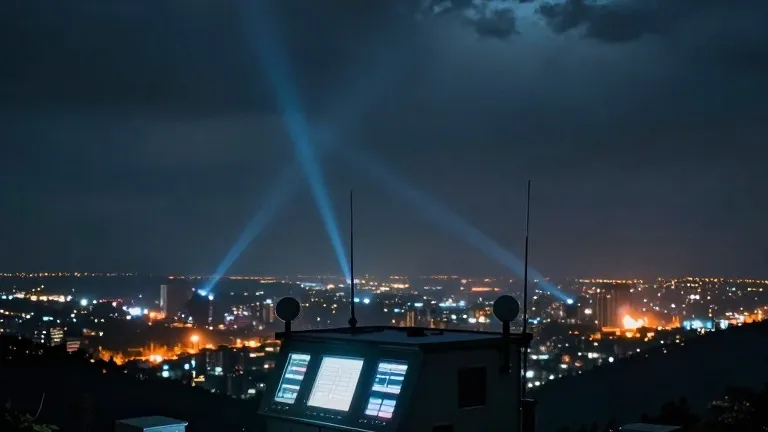
Prime Minister Mark Carney stated on Friday that the recent reduction in Ukraine's access to the Starshield satellite network is directly contributing to civilian deaths. Speaking from Istanbul, Carney argued that the decision to limit the data feed is having tangible and human consequences for the Ukrainian population.
The dispute centers on Starshield, the military-grade version of SpaceX's Starlink system. Ukraine relies on this infrastructure to track incoming missiles and jet-powered drones, as well as to guide its own interceptor and surveillance assets. Ukrainian officials confirmed early last week that they had lost a portion of this critical access, leaving a gap in their defense capabilities against rapid-moving targets.
Ukrainian President Volodymyr Zelenskyy reported that the restrictions have made it impossible for his military to track drones and missiles traveling at speeds above 160 kilometers per hour. Zelenskyy indicated that this blind spot has complicated the interception of Russian attacks, resulting in the deaths of civilians, including children. Carney echoed this assessment, describing a recent strike in central Kyiv that occurred within the previous 36 hours as a direct casualty of the reduced satellite capability.
Responsibility for the initial restriction remains a point of contention among U.S. actors. Reuters reported last week that the order originated from the White House, while The Wall Street Journal reported on Wednesday that Elon Musk issued the directive personally. Musk has maintained that Starshield is owned and controlled by the U.S. government, with the military and President Donald Trump holding the final say on usage. Trump has denied ordering the curbs, stating on Friday that he does not know who was responsible for the move.
A disagreement over the current status of the network persists. On Thursday, Trump claimed that Musk had restored Ukraine's access to the system. Zelenskyy contradicted this in a CNN interview, asserting that the system still does not function properly. Ukrainian military officials confirmed on Friday that the restrictions remain in place. In a separate NBC interview, Zelenskyy said that Ukrainian generals and government officials believe the U.S. government sent a message to limit the speed, with SpaceX executing the technical changes.
The situation arrives at a difficult moment for relations between Kyiv and Washington. Trump is currently pushing Ukraine to accept stronger concessions in a potential peace deal. He has also urged Ukraine to halt strikes on Russian oil refineries, although Starshield is not used for those specific drones because the system does not operate over Russian territory. The friction over satellite access adds another layer of complexity to these ongoing negotiations.
Carney used the incident to highlight the risks of heavy reliance on a single ally that may shift its strategic views. He said that Canada must diversify its partnerships and build sovereign capabilities to mitigate such risks. Carney acknowledged that this process will take time, noting that Canada currently relies heavily on specific systems in other countries. To reduce its own dependency, Zelenskyy signed a letter of intent on Thursday with Finnish companies Nokia and ICEYE to develop an independent Ukrainian satellite communications network.