Thousands honor dead in Manila
Filipino families gathered at cemeteries on All Saints' Day to share food and stories with their ancestors.
By Sakura Novak ·
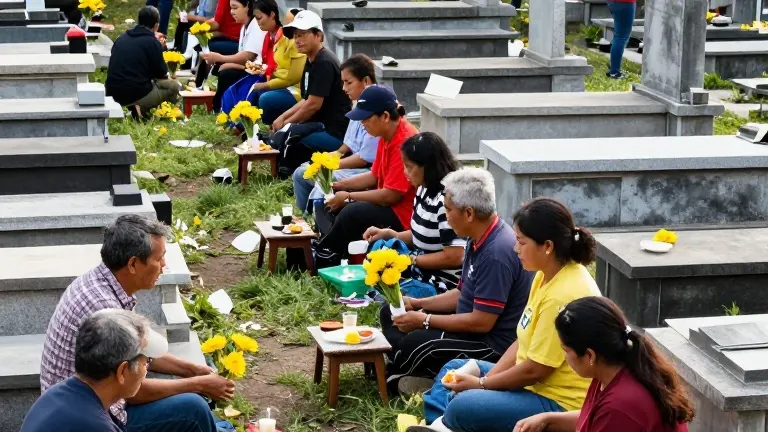
Thousands of Filipinos filled cemeteries across Manila on Sunday to mark All Saints' Day. The annual gathering, known locally as Undas, allows families to visit the graves of deceased relatives. Participants brought flowers, candles, and food to the resting places.
Lorita Santos visited the graves of her father and three other relatives. She stated that passing away does not mean the family should forget the departed. Her group prayed together and shared snacks at the site. Santos recalled how her father used to give small gifts to his children and grandchildren on payday.
Santos noted that her family passed the tradition down through generations. She is now teaching her own children to visit the graves. She explained that the goal is to ensure the next generation understands the custom in case they face a loss in the future.
Nestor Castro, an anthropology lecturer at the University of the Philippines Diliman, described the tradition as deeply rooted in local history. He noted that ancestor veneration predates Spanish colonization in the region. Before the arrival of Spanish colonizers in 1565, Filipinos honored ancestral spirits called anito. They offered food and gifts to the dead as part of this practice.
The tradition evolved after the Spanish introduced Catholicism. Some religious practices may have originated in Mexico, a country with which the Philippines had strong historical ties during the colonial era. The Manila-Acapulco galleon trade connected the two nations for centuries. Today, both countries share similar customs for honoring the dead.
In Mexico, families often spend time at graves or build altars at home. The occasion is marked by marigolds, music, and food. Similar practices occur in Bolivia, Poland, and Hungary, where Catholics gather to honor the dead with flowers and prayers.
Castro explained that these events bind families together. In Filipino culture, funeral wakes often wait for distant relatives to arrive before burial takes place. This delay creates a natural family reunion. Sticky rice cakes are often shared during Undas. The sticky texture of the food symbolizes the bonds between relatives.
Mike Mamaril, a 42-year-old school maintenance employee, visits his parents' graves as a custom from his grandparents. He said he makes time for the annual visit despite a busy schedule. The gathering provides a chance to reminisce about lighter moments from his childhood. Mamaril said the family often discusses who received the most scoldings during their upbringing.