Lebanese Shi'ites Now Prefer State Control of Hezbollah Arms
A September survey by Statistics Lebanon found that two-thirds of Shi'ites want the state to hold the group's weapons, a shift from earlier polls that showed strong resistance to disarmament.
By Sakura Novak ·
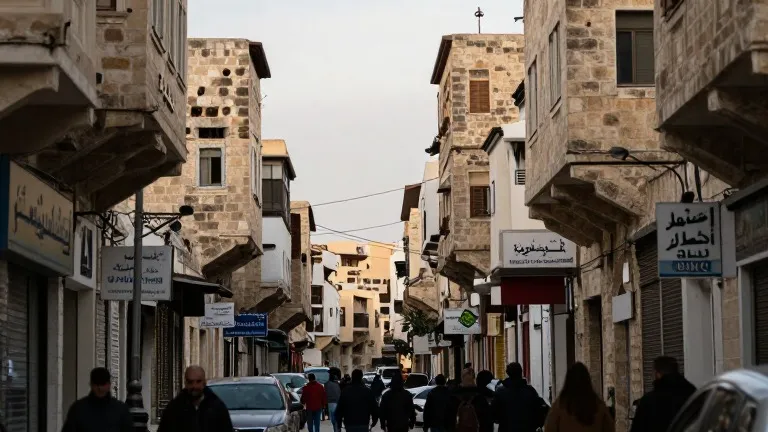
Lebanese Shi'ites are increasingly willing to place Hezbollah’s weapons under state control, according to a survey conducted in September by Statistics Lebanon. The poll, which sampled 800 individuals, indicates a notable shift in sentiment within the community that has traditionally served as the group's power base. Most respondents now support handing over the arsenal to the Lebanese state rather than leaving it in the hands of the militia.
The data shows that 66.4% of those surveyed backed state control of the weapons. In contrast, 29.6% preferred that Hezbollah retain its arms. Hezbollah has long maintained that its arsenal is necessary for defending Lebanon against Israel. The new results suggest that a majority of the community no longer views the group’s independent military capacity as essential for their security.
Trust in the Lebanese Armed Forces appears to have strengthened significantly. Approximately 78.5% of respondents said they trust the army. Furthermore, 51.1% identified the military as the institution best positioned to ensure long-term security. Only 16.5% chose Hezbollah for that role. This stands in sharp contrast to the group's traditional claim of representing the security interests of Lebanon's Shi'ite population.
The survey also revealed a desire for centralized decision-making. According to reporting by Kataeb.org, 71.1% of participants said that decisions regarding war and peace should rest solely with the state. A small minority, just 5.9%, believed that Hezbollah's leadership should play a larger role in shaping the country's future. This finding aligns with the broader trend toward state authority over the militia's influence.
Despite the shift, sentiment toward the group remains mixed. About 67.4% of respondents felt that Hezbollah had failed to meet its goals or only partially succeeded in the war with Israel. Additionally, 42.1% expressed disappointment, anger, or concern regarding the group's leadership and the conflict's aftermath. Even so, 59.5% still reported some level of trust in Hezbollah, with 37.1% indicating a great deal of confidence in the organization.
Roi Kais, a reporter for Israel's public broadcaster KAN, noted that Hezbollah's strength persists due to the social and economic support networks it has established. Kais argued that the group remains influential as long as no other entity fills the vacuum left by state weaknesses. This view contrasts with an earlier survey from May 2026 by Lebanon's Information International, which found that 87.5% of Shi'ites opposed disarming Hezbollah.
Researchers Orna Mizrahi and Moran Levanoni, writing for Israel's Institute for National Security Studies, suggested that differences in survey wording might explain the gap between the two sets of results. They noted that Hezbollah's influence is deeply rooted in its social networks and the historical marginalization of the Shi'ite community. In Tyre, property owners reportedly resisted opening a branch of the Hezbollah-linked financial institution Al-Qard Al-Hassan in their building due to fears of Israeli strikes. Meanwhile, the group has announced aid of up to $14,000 for families in Beirut and the southern suburbs whose homes were destroyed, and up to $12,000 for those elsewhere.