Trump questions Israel aid after Senate losses
A historic wave of Democratic victories coincided with the president's suggestion to cut off $4 billion in annual funding.
By Sakura Novak ·
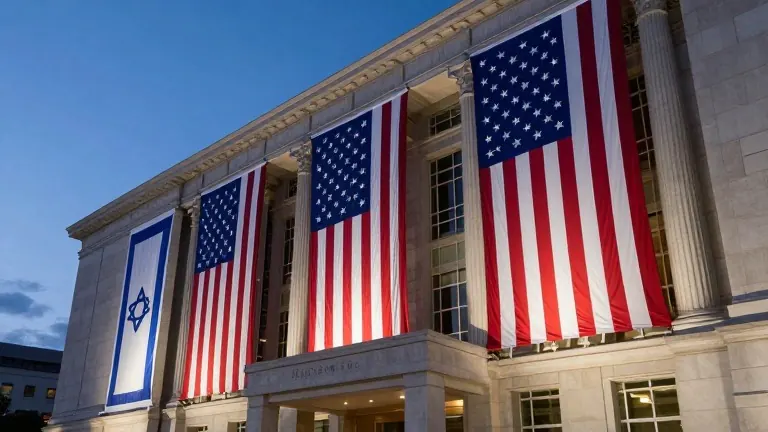
U.S. President Donald Trump suggested on Friday that the United States might cut off military aid to Israel, a move that followed a night of sweeping Democratic victories in the November 4 elections. The president made the remarks in an interview with Fox News, stating that the country's support for its closest ally has changed. The White House did not immediately respond to a request for clarification on whether the comments represent official policy or a campaign message intended to sway voters on Election Day.
The comments landed hours after results showed a massive wave of Democratic gains across the country. In the swing state of Michigan, Abdul El-Sayed defeated his Republican rival in a decisive margin. El-Sayed has accused Israel of committing genocide in Gaza, a claim the Israeli government denies. The election results signaled a sharp shift in public opinion, with Democrats and Republicans both expressing growing dissatisfaction with the alliance.
Vice President JD Vance, who is considered a potential successor to Trump, posted a postmortem analysis on social media the morning after the election. He cited advice from an unnamed pollster who described the pollster as "one of the smartest people I know in politics." The advice included four steps to win back voters: end the war, focus on the cost of living, put America First, and change the U.S. relationship with Israel. Vance noted that these points "clearly don't bode well" for the current trajectory.
The suggestion to cut aid marks a departure from decades of bipartisan support for Israel. The U.S. has provided billions in funding and weapons while shielding Israel from criticism in international forums. An academic study found that the U.S. provided $21.7 billion in aid to Israel since the war in Gaza began in 2023. Michael Singh, managing director at the Washington Institute for Near East Policy, said an aid cutoff would force Israel to finance its own weapons purchases by borrowing money or raising taxes. He described the move as a significant unilateral change in the relationship.
In Israel, Prime Minister Benjamin Netanyahu lost his parliamentary majority in last week's elections. He has called Trump the best friend Israel has ever had in the White House. Netanyahu has long expressed a desire to wean Israel off U.S. military aid over the next 10 years, aiming for a partnership based on mutual investment rather than taxpayer dollars. A spokesperson for Netanyahu told Fox in a recent interview that the prime minister has been working with Trump to make this transition.
Former Israeli ambassador Michael Oren said, "Something fundamental has shifted." He added that the call to cut military aid is "just the beginning." Chuck Freilich, a former deputy national security adviser, warned that if Netanyahu remains in office, the downward spiral in relations will likely increase. If former military chief Gadi Eisenkot forms a government, Freilich said the process of repairing the relationship could take 10 to 20 years.
Newly elected Democratic representative Brad Lander, who was detained by Israeli forces in the West Bank last month, criticized the idea of sending a U.S. delegation to Israel to repair ties. Lander wrote that American voters are not looking for a tour but for respect for international law and human rights. The next steps in U.S. policy remain unclear as the administration evaluates the election results.