Trump Details 50-Yard Naval Stopover for Warships Returning from Iran
The president outlined a plan for warships to halt near the Cuban coast while Secretary of State Marco Rubio invited the island's population to engage in secret talks with the CIA.
By Kwame Silva ·
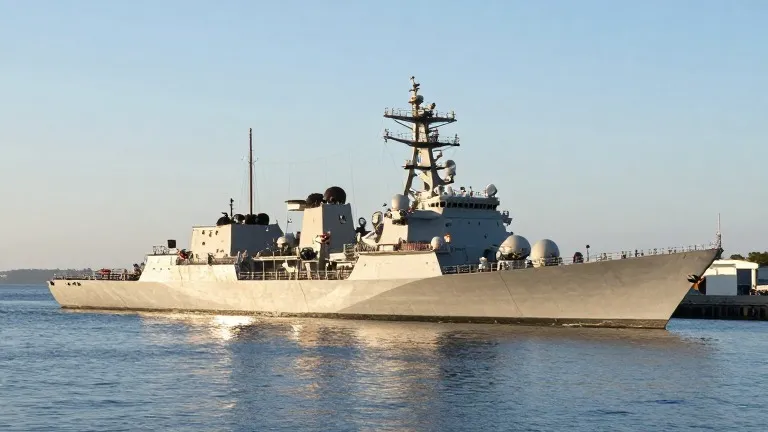
President Donald Trump ordered American warships to stop approximately 50 yards from the Cuban coast during their return voyage from the Iran war. The directive came during a campaign rally for candidates in south Florida on Friday, held just days before the midterm elections. Trump described the maneuver as a "little stopover" intended to signal strength to the island nation.
The president explained the operational details to a crowd that had raised concerns about the economic impact of the Iran conflict on domestic prices. He stated that the ships would pass Cuba, with one vessel pausing near the shoreline. "They'll raise up their hands," Trump said. "And then we're going to send Marco Rubio in to finish up the deal."
Secretary of State Marco Rubio reinforced the military posture with a diplomatic call to action on social media. In a post directed at those seeking positive change, Rubio declared that the current moment offers a unique opportunity. He encouraged Cubans to pursue their goals "through a discrete partnership with the CIA." The post referenced the disappointment of broken promises, widespread corruption, and the privileged lifestyle of a small elite.
Rubio, whose parents emigrated from Cuba before the socialist revolution, used the word "discrete" in his message. The term typically means separate or distinct, whereas the context suggests he intended "discreet," which implies private or secret. This linguistic slip highlights the administration's dual approach of public pressure and private engagement.
Havana responded to the combined military and diplomatic moves with sharp criticism. Deputy Foreign Minister Carlos Fernandez de Cossio mocked the strategy on X, arguing that the United States was resorting to public recruitment for the intelligence agency. He added that the agency must be experiencing "a great deal of desperation or misery" to be forced to sell its services like a tube of toothpaste.
The administration has maintained an aggressive stance toward Cuba since earlier this year. Trump previously suggested that the island would be the next target for intervention after the Iran conflict concludes. In May, he and Rubio raised the prospect of military action, a threat that gained weight after the US announced criminal charges against former leader Raul Castro. Trump told reporters in the Oval Office that he expected to be the president who finally intervened.
Diplomatic efforts have produced mixed results. Senior US aides met with Cuban officials in recent months to explore improved relations, but the US side reportedly came away unimpressed. Subsequent sanctions followed these meetings. At the United Nations General Assembly last month, Trump stated that Rubio was deep into negotiations. Days later, he predicted a deal would be reached without military force. This week, however, the two governments clashed at the UN as Washington worked to build opposition to an annual vote condemning the US economic embargo.
Cuba continues to face an economic and energy crisis that began in 2020. The island's gross domestic product has shrunk, leaving its 10 million residents to deal with frequent blackouts, food shortages, and high inflation. Protests have occurred in waves, and hundreds of thousands of Cubans have emigrated, with many settling in the United States. Rubio told Fox News in late September that Cuba has already fallen, describing a country without a functional economy.
More Business · World news · Consumer Watch · Report a business · Got a Story?