Midterm Ads Target 70 House Districts
Campaign spending data shows both parties investing heavily in 70 seats as Democrats aim to retake the chamber from Republicans.
By Kwame Silva ·
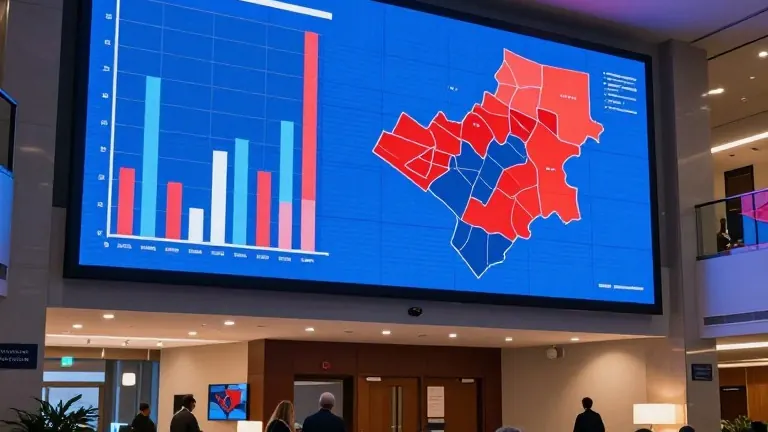
Ad spending data for the final week of the 2026 midterm election reveals a specific battleground. The contest is less about preventing a Democratic shift in the House and more about determining the scale of that shift. Both parties are concentrating resources on a defined set of districts rather than a broad national wave.
An NPR analysis identifies 70 districts where both parties are spending at least six figures in their final messaging pushes. This expansive competitive landscape includes deep-red areas and traditionally blue zones. The financial commitment varies by district, with some receiving millions while others receive strategic last-minute allocations.
Michigan, North Carolina, New York, and Florida lead the spending totals. Each of these states has toss-up districts attracting more than $10 million in ad buys. Meanwhile, deep-red communities in Tennessee, Oklahoma, and Arkansas are seeing seven-figure expenditures. These high-cost districts represent the core of the final electoral battle.
The Cook Political Report rates Democrats as favored in 220 seats. It lists 17 races as toss-ups and another 30 as potentially competitive but leaning Republican. This data suggests the current Republican advantage of 218-214 in the House is likely to reverse. The midterm environment currently disfavors the party in power.
Specific seats show sharp shifts from the 2024 presidential cycle. Ten districts voted for one party’s presidential candidate and the other party’s House nominee. This includes districts held by Democratic Reps. Adam Gray, Nellie Pou, and Marie Gluesenkamp-Perez. It also includes the district of retiring Republican Rep. Don Bacon. AdImpact data shows Republicans have recently cut ad reservations in all four of these districts.
Polling from NPR, PBS News, and Marist indicates a favorable environment for Democrats. They hold a 10-point advantage among registered voters and an 8-point lead among likely voters on the generic congressional ballot. Cost of living remains the primary voter concern, driven by rising gas prices, tariffs, and the ongoing war in Iran.
Redistricting has also altered the map. A Supreme Court decision allowed Republicans to shift boundary lines to add conservative voters to districts held by Reps. Marcy Kaptur, Don Davis, Shomari Figures, and Darren Soto. Democrats performed similar shifts in California for districts held by Republican Reps. James Gallagher, David Valadao, Ken Calvert, Darrell Issa, and independent Kevin Kiley. Only Figures and Soto currently represent districts rated as favoring Republicans.
Michigan’s 7th District and North Carolina’s 1st District are the most expensive races, each planning over $12 million in spending. Other high-spend areas include Florida’s 14th, 22nd, and 25th Districts, New York’s 17th, and Iowa’s 2nd and 3rd. The 70 districts with significant ad spending voted for President Trump by an average of 9 points in 2024.