Geffray: French schools 'not fit' as union demands more than €4bn
The government announced a package of education reforms on Monday, but student leaders said the measures were insufficient and urged pupils to keep barricading schools.
By Lina Lewis ·
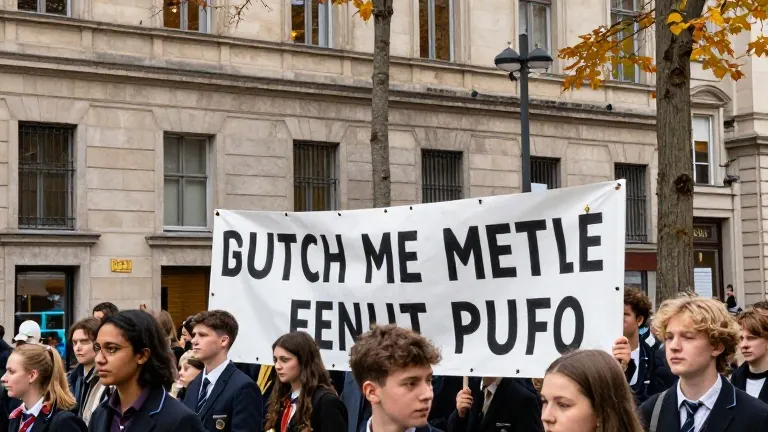
Student leaders in France called on high school pupils to maintain school blockades and join street protests on Monday, rejecting a new package of government measures intended to end the ongoing crisis. The union Les Lycéens argued that continued pressure was necessary to secure their full list of demands.
Pierre Sourzat, a representative for Les Lycéens, told France Info television that the group was engaged in a power struggle with the state. "We want measures, not half measures," he said. He emphasized that while the union was now at the negotiating table, mobilization had to continue to meet the maximum of their requests.
The government unveiled the proposals after more than five weeks of high school blockades that began in September. The movement has grown into the largest youth protest in years, joined by trade unions and cost-of-living demonstrators who hold mass street rallies every Saturday.
Education Minister Édouard Geffray announced a €4 billion government loan to regional authorities to begin repairs on school buildings. He acknowledged that some schools were "not fit" for teaching due to collapsing ceilings, mould, broken toilets, and missing chairs. The loan is the central financial component of the new plan.
Geffray also addressed complaints about overcrowded classes. He stated that class sizes for 15-year-olds in the first year of high school would be capped at 28 students in 50% of schools in the lowest-income areas. This cap will extend to all high schools next year. The government also plans to create additional teaching posts and review the baccalaureate system.
The university application platform Parcoursup, which critics have described as opaque, will be modified in 2027 and replaced by a new system in 2028. Higher Education Minister Philippe Baptiste said 15,000 extra student places would be created in higher education, with a focus on vocational courses. Parliament is scheduled to debate these issues on Wednesday.
Louis Letoublon, who met with Prime Minister Sébastien Lecornu, said the government's response showed it was afraid and listening. "Not all our demands were met. We’ll go on for as long as it takes," Letoublon stated. Baptiste added that the government's door remained "open" for further discussions.
The protests have taken a physical toll. Several children have been maimed or seriously injured, allegedly by police explosive weapons, while hundreds have been arrested and held in custody. After France’s worst day of violence in years on 17 October, which saw looting and fires, authorities increased security measures and placed curfews in certain cities. Interior Minister Laurent Nuñez said ultra-right groups arrived in "organised formations" in cities like Nice and Montpellier, with 11 suspects facing charges. President Emmanuel Macron called the 31 October demonstrations a "day of risk" and said the country should not be in "such a state of turmoil" six months before the presidential election.