Free haircuts aim to reverse 50% drop in donations for cancer wigs
Volunteer barbers at malls in Beersheba and Kfar Saba are cutting hair to help Zichron Menachem build wigs for patients who have lost their hair to chemotherapy.
By Sakura Novak ·
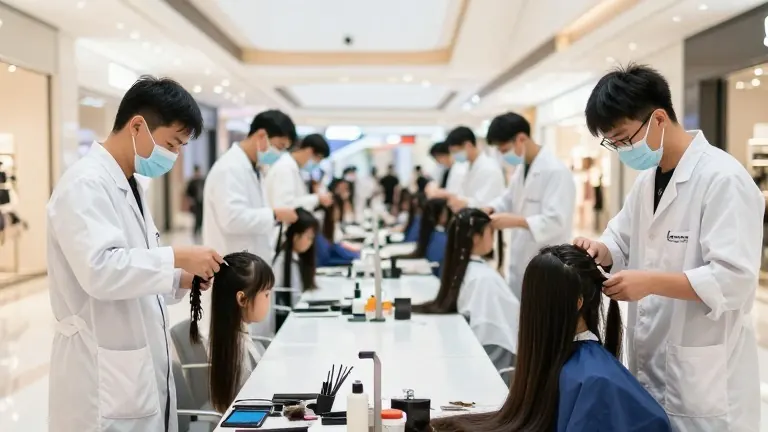
The number of hair donations reaching cancer patients in Israel has fallen by roughly half, a decline that has left a gap in the supply of natural hair wigs. To address this shortfall, the non-profit Zichron Menachem is holding free haircut events in malls across the country. The goal is to gather enough long braids to continue making custom wigs for women undergoing chemotherapy.
The drop in donations began in late 2023, following the outbreak of the war. At that time, the organization reported that monthly contributions fell from approximately 3,000 to 1,500. A report published in November 2025 confirmed that hair donations had decreased by about 50% over the preceding two years. This reduction occurs at a time when the Israel Cancer Association estimates that 34,000 new cancer cases will be diagnosed in 2026. That figure translates to roughly 93 new patients per day.
Earlier this month, a volunteer event took place at the Azrieli Negev Mall in Beersheba. Barbers cut hair for free for anyone willing to donate a braid. No advance registration was required. Participants received a small gift from the campaign sponsor, the Pantene Association, in exchange for their hair. Professional hairdressers including Haim Pitousi, Rami Lagaziel, and Hagit Emakias volunteered their time. The haircare brand LICABRUSH also participated.
Fanny Barbiebai, the CEO of Azrieli Negev Mall, stated that the initiative connects the community with meaningful giving. She noted that donating hair can make a large difference for women dealing with cancer. "We invite the general public to come, take part in the activity and turn a small act of giving into great hope for someone else," Barbiebai said.
The Beersheba event followed a similar project at Arim Mall in Kfar Saba. Both events operated under the same guidelines set by Zichron Menachem. Donors needed to provide hair at least 30 centimeters long. Dyed hair was acceptable if it met the organization's specific standards. The organization uses the donated hair to create wigs tailored to each patient's length, color, and hair type. These wigs are provided to patients at no cost.
Tzomet Hasharon, which reported on the Kfar Saba event, emphasized the emotional impact of hair loss. The group stated that losing hair is one of the hardest aspects of coping with the disease. It can affect a patient's self-image, confidence, and daily routine. "A wig made of natural hair, tailored to the patient's appearance and needs, may help cope with the change and allow her to feel more comfortable during treatment," the organization said.
Zichron Menachem was founded in 1990 by a couple who lost their child to leukemia. The organization supports young people under 25 living with cancer, as well as their parents and siblings. It provides information, second opinions from its "clinic of hope," and respite from medical routines. The group works with medical professionals who argue that comprehensive treatment requires this type of support. Haim Arental, the organization's chair and founder, described the effort as a practical solution. "A wig made of natural hair restores something basic: a sense of identity and control," Arental said.
Data from April 2026 shows the geographic breakdown of donations in 2025. Jerusalem recorded 1,393 hair donations, Tel Aviv recorded 679, and Haifa recorded 471. The organization continues to collect hair through these public events to maintain the supply of natural hair wigs for patients.
The campaign is known as "Braid of Strength." Beersheba and Negev News noted that the public can respond to the need by participating in these events. The organization states that every donation helps restore a sense of identity and control for women and girls dealing with cancer.