$91 million: Australia's annual cost for failing feral deer control
A leaked government report indicates every state and territory is underperforming on deer management, with South Australia as the sole exception.
By Lina Lewis ·
Australia spent the last five years trying to manage a growing feral deer problem, and the results show a system under strain. A leaked national report released on 30 October 2026 details the economic and environmental toll of the invasive species.
The report, produced by the National Vertebrate Pest Coordinators, places the annual cost of production losses and management time at more than $91 million. It identifies deer as one of the country's most rapidly increasing invasive pests. The data covers the period from 2020 to 2025, a time when deer populations expanded into major urban areas.
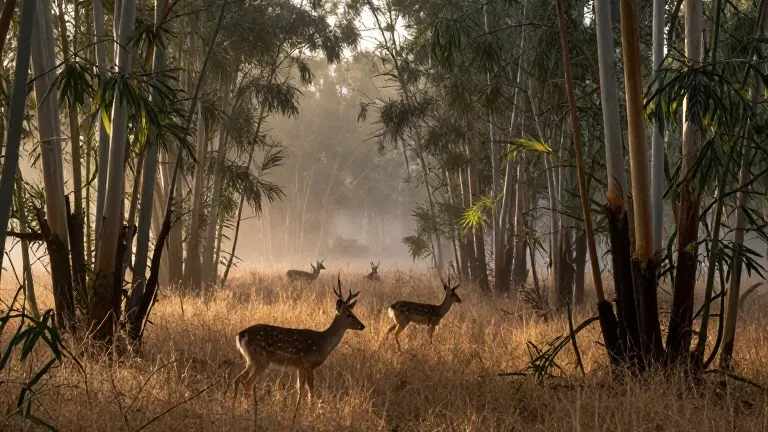
Six species of feral deer are now established in Australia: chital, fallow, hog, red, rusa, and sambar. Dense populations are concentrated in the southeast, with smaller groups in South Australia, Western Australia, and the Northern Territory. The report card uses a traffic light system to grade each jurisdiction's performance. No state or territory received a green mark in all four categories except South Australia.
South Australia received a green rating in every category. The state launched a statewide eradication plan in 2022 after estimates showed annual damage costs of $36 million would rise to $241 million by 2031. In contrast, New South Wales and Tasmania received red ratings in all four categories. Queensland and the Australian Capital Territory each received three reds and one yellow.
Reece Pianta, advocacy manager for the Invasive Species Council, said the report confirms what land managers have observed for years. He described deer as Australia's next feral pig, noting that current intervention could still reverse the spread. Pianta pointed to footage released in May 2025 showing the Gold Coast under heavy deer pressure.
Prof Euan Ritchie of Deakin University, president of the Australian Mammal Society, stated that governments are failing to invest enough to control populations. He cited impacts on agriculture, native wildlife, road safety, and culturally significant sites. Ritchie described the findings as a result of sustained failure to act.
Prof Andrew Lowe of the University of Adelaide said South Australia's success validates its approach. He noted that deer have declined since a $4 million program began in 2022. Lowe estimated that functional eradication in South Australia will require another $10 million over the next 10 years. He compared that cost to the projected $241 million in damages if the population grows unchecked.