Trump rallies and false claims defined a turbulent midterm
Despite dozens of rallies and a directive to treat him as a candidate, Republicans lost majorities in both chambers of Congress.
By Kwame Silva ·
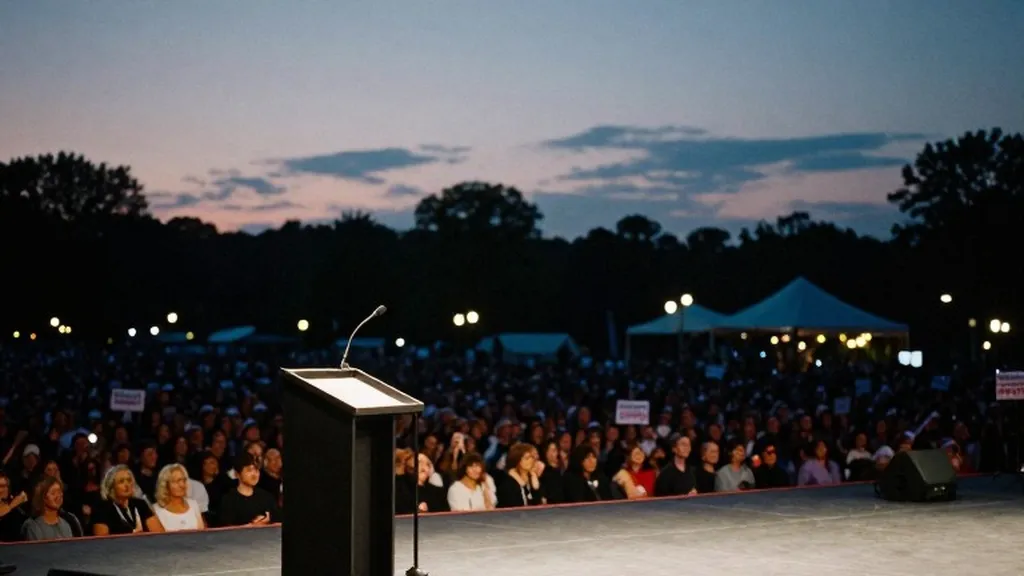
President Donald Trump spent the final stretch of the 2026 midterm campaign operating as a de facto candidate for offices he did not hold. He visited dozens of rallies across the country, focusing his energy on the reddest states including Kansas, Mississippi, and South Carolina. His strategy was explicit. He told supporters to act as though he were on the ballot, a message designed to maximize turnout in districts where his personal brand remained strong. This aggressive schedule underscored the challenges facing his party, which held out hope that their significant financial advantage would help stem the tide of voter dissatisfaction.
The results delivered a decisive rebuke. Democrats won majorities in both the U.S. House and the Senate, picking up at least 43 House seats and seven Senate seats. According to Ballotpedia, the net loss of at least seven Senate seats placed this election year in the top 20% of election years in terms of seat swings against a president’s party. This threshold is often defined as a wave election. While the House loss of 42 seats fell short of the 48 needed to qualify as a wave, the overall shift in power was stark. Democrats now hold at least a 250-157 majority in the House and a 54-44 majority in the Senate, according to results reported on November 6.
Trump’s approval numbers and economic claims complicated the narrative for Republican candidates. In a Fox News Channel interview on election day, Trump declared that inflation was solved. This statement came despite data from the Commerce Department released the previous week, which showed consumer prices rose 3.6% in September from a year earlier. The AP Voter Poll indicated that three-quarters of voters described the economy as not so good or poor. About eight in ten said inflation had caused a severe or moderate financial hardship for their households, making it harder to afford basic essentials like gas and groceries.
Many Republican candidates kept a careful distance from the president during the campaign. They sought to differentiate their local races from national issues that had become unpopular, such as the war in Iran and perceptions of government corruption. The AP Voter Poll found that roughly half of voters cited government corruption and the cost of living as crucial to their vote. These issues ranked higher than immigration enforcement policies or the war in Iran. This dynamic created a tension where candidates had to balance Trump’s energy with the need to present a moderate image to frustrated independents and moderates.
The president also engaged in false fraud claims that added to the noise of the election cycle. While specific details of these claims varied by state, the general sentiment was that the voting process was under threat. This narrative often clashed with the reality of high early voting turnout. More than 59 million people had already cast ballots before Tuesday, according to an Associated Press analysis, surpassing early-voter turnout from 2022. The high volume of early votes suggested that voters were engaged and eager to participate, a factor that complicated arguments about low turnout or procedural irregularities.
Democratic leaders capitalized on the anger over high prices and the war in Iran. Rep. Suzan DelBene, chair of the Democratic Congressional Campaign Committee, stated that the American people were angry and wanted change. She noted that momentum was on her party’s side, citing the discontent over Trump’s failure to tackle rising costs. The electorate was sour heading into Tuesday, with the poll showing that about three-quarters of voters felt angry or dissatisfied with the country’s current trajectory. This dissatisfaction was particularly high in blue states but remained a majority sentiment even in red states.
The economic message proved more potent than the war or corruption narratives for many voters. The AP Voter Poll revealed that the cost of living was a dominant concern. Voters felt that the administration had not done enough to provide relief. This frustration translated into votes for Democratic challengers in swing districts. The results showed that Democrats were able to win seats in states that Trump had won handily in the 2024 presidential election. This included victories in states like Arizona, Kansas, and Michigan, where Democrats were defending governorships and other offices.
Trump’s role in the campaign also involved a combative stance toward the incoming Democratic Congress. After the election, he declared on social media that investigative requests made by Democrats were extortion at the highest level. Attorney General Todd Blanche echoed this sentiment, suggesting that criminal investigations of Democrats were possible. This rhetoric set the tone for what is expected to be an intense conflict in the next two years. The new Democratic leadership in Congress has signaled that they are prepared to push back aggressively against the executive branch.
The shift in power has immediate implications for the legislative agenda. Democrats now control the levers of power in both chambers, allowing them to prioritize investigations and policy changes. Rep. Robert Garcia, who is poised to chair the House Oversight Committee, has already announced plans to investigate what he calls the Trump crime family. He stated that the days of Democrats not fighting back are over. This aggressive posture contrasts with the more collaborative tone that Trump had hoped to foster during the campaign.
The election also highlighted the importance of local issues in a national referendum. While Trump’s name was on the ballot in spirit, voters made their choices based on state and local concerns. The results show a electorate that is deeply divided but willing to punish the president’s party for its performance. The loss of control in both chambers marks a significant turning point for the second term. It will test the balance of power between the presidency and Congress, a dynamic that has become increasingly contentious in recent years.