Midterm Election: High Costs and War Weigh on GOP Candidates
With approval ratings below 40 percent, Republicans face a difficult path to holding the House and Senate as voters react to inflation and foreign conflict.
By Kwame Silva ·
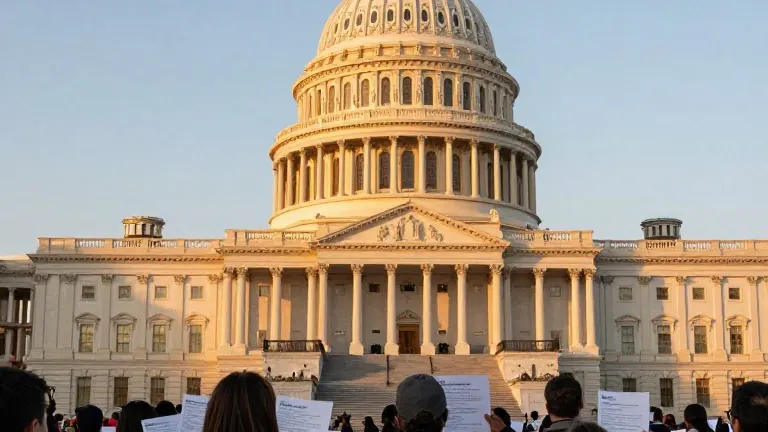
The November 3 elections will test whether voters punish the president’s party, a historical trend that complicates the path for Republicans seeking to maintain their congressional majorities.
Three factors define the current political environment: persistent inflation, an ongoing conflict with Iran, and a sharp rise in campaign spending that has made this the most expensive legislative election in history.
President Donald Trump’s decisions to impose tariffs and launch a war have directly linked his administration to rising costs for gas and food. This connection prevents Republican candidates from blaming previous administrations. Trump has also frequently told voters the economy is fine, making it harder for his colleagues to distance themselves from his message. Representative Derrick Van Orden of Wisconsin, one of the most vulnerable Republicans, stated that the war is making it exponentially harder for his party to keep the House and Senate.
Trump-aligned groups spent nearly $277 million to support Republican candidates since September. Despite this record spending, the financial advantage may not be enough to secure a GOP victory. Tariffs disrupted the agricultural economy and triggered a trade war with Canada, putting Republicans on the defensive in Senate races across Iowa, Michigan, Kansas, Nebraska, Ohio, and Maine. The conflict with Iran, which Trump said would last only weeks, has continued for eight months without a clear exit strategy.
The president’s approval rating stands at approximately one-third of U.S. adults, according to a survey by the Associated Press-NORC Center for Public Affairs Research. This figure is lower than the ratings held by both President Joe Biden and President Trump before their respective midterm elections. When approval ratings drop, presidents typically allow their party members some distance, but Trump often demands loyalty. This forces candidates to make subtle moves, such as removing mentions of the president from their websites. Former Secretary of Transportation Pete Buttigieg, campaigning in Virginia, argued that the corruption seen in the administration is directly connected to the economic pain felt by voters.
Controversies over Washington renovations are adding to voter frustration. A ballroom is being built on the White House grounds, a project that Chief Justice John Roberts called probably illegal. The administration also plans to challenge a federal judge to close a park along the Potomac River for a golf course. In Texas, outgoing Senator John Cornyn warned that the primary winner, Attorney General Ken Paxton, is weak against Democrat James Talarico. Cornyn said they have flawed candidates who will struggle even in heavily Republican areas.
Democrats are not without their own risks. Governor Wes Moore of Maryland noted that anger toward Trump is a fading emotion and that his party must deliver results. Senator Elissa Slotkin of Michigan warned that voters are not falling in love with Democrats, and that the election is a reaction to the party in power. She described the potential shift as a test for undecided voters regarding whether they made the right choice.
The last midterm election saw Democrats gain 40 House seats in 2018 and 31 seats in 2006. Republicans gained 63 seats in 2010 but fewer than 10 in 2022. The current redistricting has reduced the number of competitive House districts, but Trump’s interventions in Senate races threaten the party's majority. Iowa Senate candidate Ashley Hinson is navigating the balance between loyalty and independence, stating she will oppose Trump when necessary for Iowa.