Eisenkot Bloc Leads 56 to 50 in Final Israel Poll
Gadi Eisenkot’s Yashar party projects 22 seats, surpassing Likud, as neither coalition appears able to reach the 61-seat majority needed to form a government.
By Lina Lewis ·
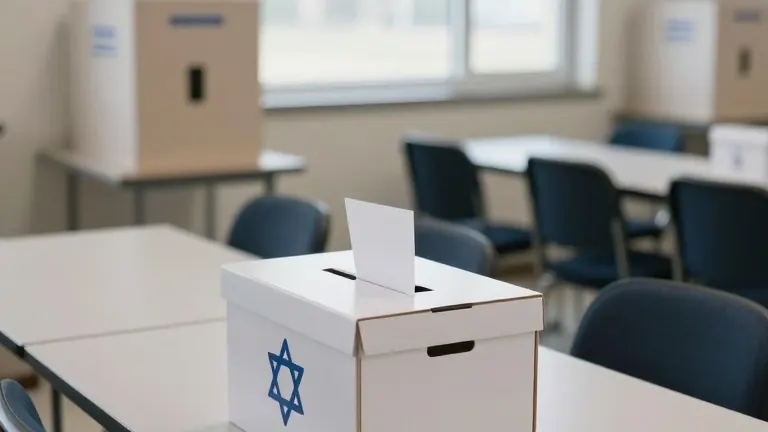
Polling stations across Israel opened at 7:00 a.m. on Tuesday for the Knesset election. Prime Minister Benjamin Netanyahu and the opposition bloc led by Gadi Eisenkot face off in the first national vote since the Hamas attack of October 7, 2023. Exit polls are scheduled for 10:00 p.m., with final results expected in the coming days.
A final Channel 12 poll released Friday projects the opposition bloc winning 56 seats. Netanyahu’s bloc is projected to take 50 seats. Arab parties are expected to secure a combined 16 seats. Neither bloc appears capable of reaching the 61-seat threshold required for a majority without external support.
Gadi Eisenkot’s Yashar party leads the opposition coalition with a projected 22 seats. This places it ahead of both Netanyahu’s Likud party and Naftali Bennett’s B’Yachad party. Likud is projected to win 19 seats, a drop from the 32 it currently holds. B’Yachad is projected to receive 14 seats.
Most opposition leaders have pledged against forming a government with Arab parties. They argue such a coalition is unlikely to succeed following the October 7 events. This stance leaves both major blocs without a clear path to a standalone majority.
Voters are weighing several key issues. The Israel Defense Forces faces a manpower crisis after three years of war. Disputes over conscription for haredi men remain central to the debate. Many also call for a state commission to investigate government failures during the October 7 attack.
The electoral threshold is set at 3.25 percent of valid votes. Prof. Alex Weinreb of the Taub Center estimates a party needs 165,635 votes to cross this line at a 70 percent turnout rate. Higher turnout increases the required vote count, making it harder for small parties to enter the Knesset.
Ofer Winter’s People of Israel party and Yoaz Hendel’s Reservists-Economics party are competing to clear the threshold. Their success could influence coalition building for both major blocs. Police prepared for the election by deploying approximately 20,000 officers and volunteers to maintain order at polling stations nationwide.