Chile Desert Bloom Drives Tourism Spike
Heavy El Niño rains triggered the largest floral display in decades, boosting visitor numbers to Llanos de Challe National Park and prompting a bid for UNESCO status.
By Sakura Novak ·
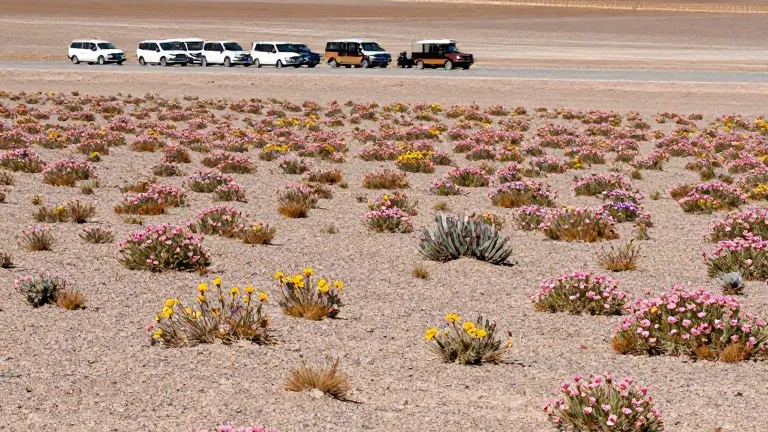
Heavy rainfall from the El Niño super cycle has turned parts of the Atacama Desert in Chile into a vibrant floral display, driving a surge in tourism that officials say could reshape the region's economic profile. The latest bloom, which began appearing in late October, is projected to last until mid-November 2026. This event follows flash floods in July and August that damaged dozens of homes and forced hundreds of residents to evacuate.
The region has recorded its heaviest rainfall since records began in the 1950s. This water penetration allowed dormant seeds and bulbs to sprout, creating a patchwork of colors across the desert floor. More than 200 species are currently in flower. Scientists noted that some blooms are occurring in areas where flowers have never been previously recorded, suggesting dormancy dates back to before the phenomenon was first studied in 1997.
Visitor numbers to Llanos de Challe National Park have already exceeded the annual average. The park typically receives about 10,000 visitors per year. However, 15,000 tourists visited in just the last few weeks as the flowers emerged. Chile's national tourism board expects the region to generate approximately 300,000 overnight trips during the two-month flowering period.
The economic impact extends beyond immediate ticket sales and lodging. Moisés Grimberg, administrator of Llanos de Challe National Park, described the situation as a race against time for the species to complete their life cycles, which last two to three months. The brief biological window supports a transient ecosystem involving insects, lizards, bats, and larger mammals like the guanaco.
Local leaders are leveraging the event to diversify the regional economy, which is currently heavily reliant on mining. Miguel Vargas, the governor of the Atacama region, has begun the process of seeking UNESCO World Heritage recognition for the desert bloom phenomenon. Vargas stated that such recognition would put the Atacama region on the world stage and strengthen special interest tourism. He aims for the site to become Chile's eighth World Heritage site within a couple of years.
Biologists from INIA, Chile's national seed bank, are collecting specimens to analyze before the season ends. Ana Sandoval, a biologist with INIA, explained that the team wants to preserve the genetic material and unique adaptations developed by plants to survive arid conditions. The group is analyzing how different species harvest water, noting features such as fine hairs on leaves and thick waxy cuticles. The seed bank aims to document these traits before the flowers fade.
A national park dedicated to the bloom was created in June 2023 to protect a 141,000-acre area. The new UNESCO bid seeks to expand protections and global visibility. As the current bloom enters its final weeks, scientists will determine if this was the largest flowering event on record and whether any previously unknown species have emerged.
More Business · Consumer Watch · Report a business · Got a Story?