Arctic Logistics: Icebound Tankers Reveal Cost of Russia's Northern Sea Route Push
A recent stranding of sanctioned Russian tankers in the Vilkitsky Strait highlights the logistical and financial constraints facing Moscow's ambitious Arctic shipping strategy.
By Sakura Novak ·
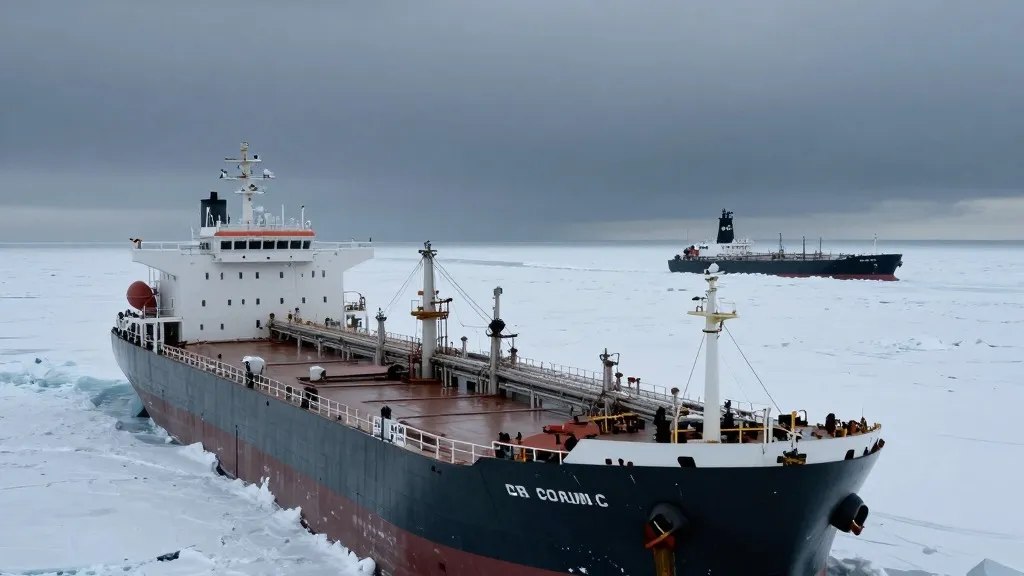
The promise of a new economic artery through the Arctic recently ran into a wall of ice, exposing the financial fragility behind Russia's grand maritime plans.
In July, a fleet of sanctioned Russian tankers became immobilized in the Vilkitsky Strait, a critical 55 kilometer choke point on the Northern Sea Route. The vessels were stranded far above the Arctic Circle, with nuclear-powered icebreakers located several days away. Only one tanker managed to pass through the strait, while the others waited up to two weeks before abandoning the route. This delay underscored the operational costs of navigating a region that remains physically unpredictable despite political optimism.
The incident challenges the Kremlin's narrative of a safe and reliable passage to Asian markets. Ksenia Vakhrusheva, who leads the Arctic project at the Bellona environmental group, noted that less ice does not automatically equate to easier navigation. She explained that melting ice can fragment and pack tightly in narrow waterways, creating barriers for ships that lack specific ice class ratings. This physical reality complicates the logistics for energy companies relying on this corridor to bypass potential European naval interdiction and Ukrainian drone threats.
Volume data offers a mixed picture of the route's commercial success. President Vladimir Putin stated last month that 37 million tons of cargo moved along the route in 2025, predicting this figure would nearly double by 2030. However, independent assessments suggest a more modest trajectory. The Norway-funded Center for High North Logistics reported that Russia shipped approximately 2 million tons of crude oil along the entire route to Asia by the end of September. By mid-October, trading data indicated the total had risen to about 20 million barrels, a 50 percent increase over the previous year but still representing only about 1 percent of Russia's total seaborne oil exports.
Western sanctions continue to impose significant friction on the expansion of Arctic infrastructure. Tomas Alexa, a senior analyst at Ambrey, observed that the surge in traffic is coming from a relatively low base. He pointed out that sanctions hamper Russia's ability to build and maintain ice-capable vessels. Spare parts and construction materials often require routing through third parties, and the loss of repair services from Norwegian, Danish, and Dutch firms adds to the operational complexity and cost for Russian operators.
The route is no longer exclusive to Russian traffic, with other nations testing its viability. South Korea reported on October 22 that its first container ship had utilized the Northern Sea Route. While officials praised the shortcut to Europe, they acknowledged difficult conditions, including large ice floes in the Bering and Vilkitsky straits. China also launched its first scheduled container service to Europe along this path this year, completing several voyages and signaling growing international interest in the corridor's potential as a trade lane.
Strategic and environmental considerations add layers of risk to the commercial calculus. Catherine Sendak of the Center for European Policy Analysis questioned whether Russia has clear answers regarding tolls and services for foreign vessels, noting that Moscow might limit access to other actors. Meanwhile, EU foreign affairs chief Kaja Kallas described the region as a front line of global power competition. This sentiment is reflected in recent military moves, including the NATO Arctic Sentry mission launched in February and the United States' plans to expand its presence in Greenland.
Environmentalists warn that increased shipping, particularly by aging tankers, poses specific risks in cold conditions. Vakhrusheva highlighted that oil degrades more slowly in the cold and can spread over ice, potentially accelerating climate change effects. The lack of public data on incidents along the route, combined with the area's remoteness, leaves the market with limited transparency regarding the true cost of these operations.
More Business · World news · Consumer Watch · Report a business · Got a Story?