After the vote: How voters navigated the 2026 midterm ballot
With Democrats securing control of both chambers, a look back at the practical hurdles and logistics that defined the November 3 voting process for millions of Americans.
By Lina Lewis ·
The midterm election of November 3, 2026, has concluded with a decisive shift in power. Democrats have secured majorities in both the U.S. House and the U.S. Senate, winning at least 43 House seats and seven Senate seats according to verified results. This outcome marks a significant wave election, placing the year in the top 20 percent of historical seat swings against a president’s party. While the political implications are profound, the election was also defined by the logistical reality of voting in a divided nation. The process required voters to navigate a complex patchwork of state rules regarding identification, mail ballots, and polling place hours.
The federal government maintains the website vote.gov as a primary resource for voters. This site serves as a central hub for individuals to verify their registration status and find specific instructions for their state. For the 2026 cycle, the site highlighted the varying deadlines for returning mail-in ballots. In many jurisdictions, the deadline for postmarked mail ballots was November 3, while some states allowed ballots received up to several days after the election if postmarked on time. This distinction was a critical factor for voters who relied on the United States Postal Service to deliver their ballots in a timely manner.
The United States Postal Service played a visible role in the election infrastructure. Postal workers processed a high volume of election-related mail in the weeks leading up to the vote. In states where mail ballots were a significant portion of the total count, the timely delivery of these envelopes was essential. The Postal Service operated under federal guidelines to ensure that election mail received by the deadline was processed with priority. This operational focus helped mitigate concerns about delayed delivery, a topic that had generated significant discussion among voters and election officials in the months prior.
Identification rules varied widely across the 50 states. Some states required voters to present a specific form of photo identification, such as a driver’s license or state ID card. Other states permitted non-photo identification, such as a utility bill or bank statement, or allowed voters to sign an affidavit attesting to their identity. The lack of a uniform federal standard meant that voters had to consult their local election boards for precise requirements. This variability created a practical challenge for first-time voters and citizens who had recently moved to a new state.
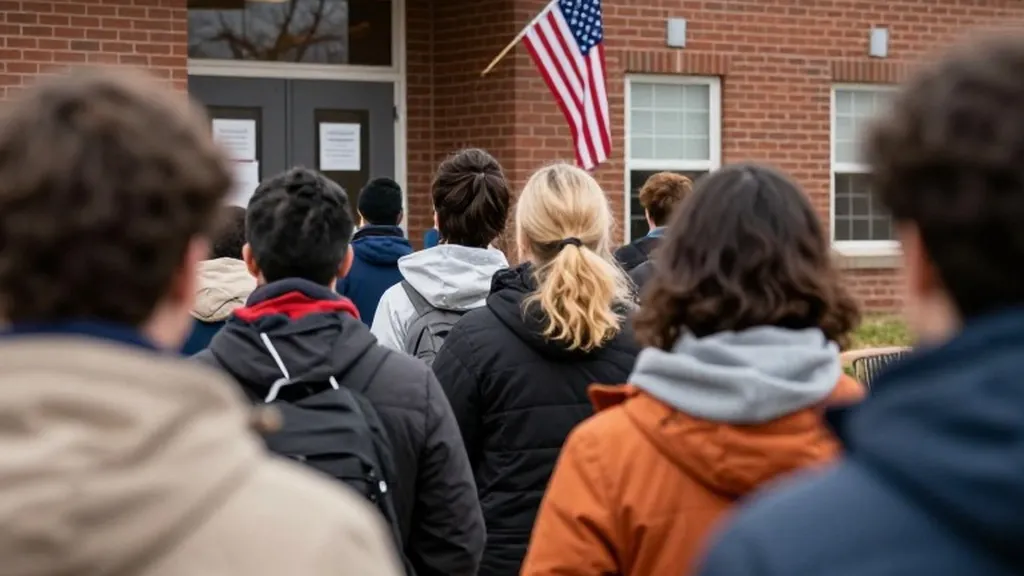
Polling place hours were another area of state-specific variation. Most states opened polls at 7:00 AM and closed at 7:00 PM local time, but this was not universal. In some jurisdictions, polls opened as early as 6:00 AM or closed as late as 8:00 PM. Voters who arrived after the official closing time were generally allowed to cast their ballots if they were already in line when the time limit expired. This rule, often referred to as the line rule, required poll workers to manage queues efficiently to ensure that every eligible voter who was present at the closing time could participate.
The experience of waiting in line was a common theme in post-election reporting. In several high-visibility districts, voters reported long waits due to high turnout and the manual processing of provisional ballots. Provisional ballots are used when a voter’s eligibility is in question or when they vote in the wrong precinct. These ballots are typically counted after election day, once election officials have verified the voter’s registration and eligibility. The counting of these ballots often extends the official results by several days, a process that was evident in the 2026 cycle as well.
The results of the election reflect the success of these logistical efforts in a competitive environment. Democrats won 22 gubernatorial races, compared to 12 for Republicans, as of the latest verified counts. This shift in state executive power aligns with the national trend of Democratic gains. The party also secured control of 46 state legislative chambers, a significant increase from previous cycles. These victories provide a strong foundation for the legislative agenda of the incoming majority, though the practical work of governing will depend on the cooperation of statehouses that remain divided.
In the U.S. Senate, Democrats now hold a 54-44 majority. This control of the upper chamber is crucial for confirming judicial nominees and passing legislation with a simple majority. The seven Senate seats that changed hands were previously held by Republicans, indicating a strong Democratic performance in states that had been leaning Republican in recent years. The House of Representatives, meanwhile, saw Democrats pick up at least 43 seats, resulting in a majority of at least 250-157. This margin allows for the election of committee chairs and the setting of the legislative calendar for the next two years.
The election also had implications for state-level trifectas, where one party controls the governorship and both legislative chambers. Democrats won 20 trifectas, while Republicans held 16, and eight states remained divided. This distribution of power will shape the policy landscape in each state, with Democratic-led states likely to advance priorities such as infrastructure investment and social programs. Republican-led states may focus on tax policy and regulatory reform. The divided governments in the remaining states will require bipartisan cooperation to pass significant legislation.
As the dust settles on the 2026 midterm election, the focus shifts to the implementation of the will of the voters. The practical mechanisms of the election, from the operation of vote.gov to the processing of mail ballots by the Postal Service, served their purpose in a highly contested environment. The results now stand as a clear mandate for change, with Democrats holding the keys to both chambers of Congress and a majority of governorships. The next step is the transition of power, a process that will test the resilience of the democratic institutions that facilitated the vote.