25 Years On: The $399 iPod That Disrupted the Portable Music Market
Apple's entry into the portable audio space with a 5GB hard drive player marked a pivotal shift in consumer electronics strategy.
By Kwame Silva ·
A quarter-century ago today, Apple fundamentally altered the economics of portable digital entertainment.
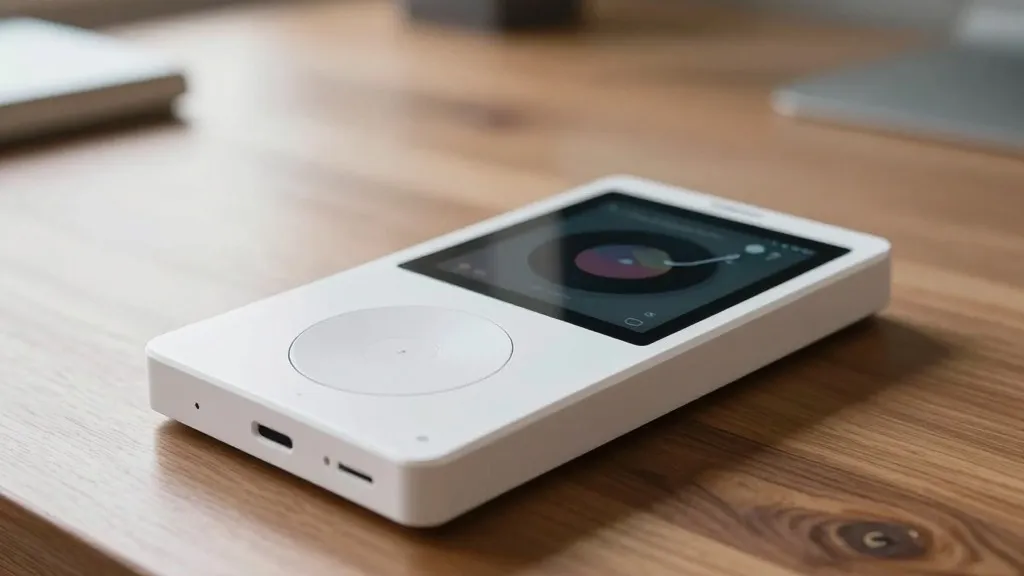
On October 23, 2001, Apple CEO Steve Jobs introduced the original iPod, a device priced at $399 that promised to store 1,000 songs in a form factor comparable to a standard deck of cards. The launch was not merely a product release but a strategic move to position the Mac as the central hub for a consumer's digital lifestyle. At the time, the personal computer market was recovering from the dot-com bubble burst, and Apple was capitalizing on the success of its iMacs and iBooks to expand its consumer reach. Jobs identified music as a massive, leaderless target market, a sector where existing solutions had failed to satisfy the average consumer.
The competitive landscape in 2001 included players from major corporations like Sony as well as smaller firms such as Creative and Sonic Blue. However, Jobs argued that none had found the correct formula for digital music. The market offered four primary options: CD players, MP3 CD players, flash-based players, and hard disk-based jukeboxes. Apple selected the hard drive-based approach as the optimal entry point, leveraging a 5GB capacity that was significantly larger than the flash memory available at the time. This storage capability allowed for 1,000 typical pop-length MP3s encoded at 160Kbps, a volume Jobs described to the audience as representing most people's entire music libraries.
The physical design of the device was a critical differentiator, made possible by Toshiba’s 1.8-inch ultra-thin hard drive, which measured just 0.2 inches in thickness. The resulting iPod measured 2.4 by 4 by 0.78 inches and weighed 6.5 ounces, making it lighter than many contemporary cell phones. This portability was paired with advanced functionality, including 20-minute skip protection and fast file transfer capabilities. The device utilized a single FireWire 400 cable for both data transfer and charging, a feature Jobs highlighted as a unique advantage over competitors relying on slower USB connections. While USB transfers of a single CD of MP3s could take approximately five minutes, the FireWire connection reduced this to between five and 10 seconds. For a full library of 1,000 songs, the transfer time was estimated at 10 minutes, compared to five hours for a USB-based player.
Power management was another key technical specification, with a rechargeable lithium-polymer battery providing 10 hours of continuous playback. Apple stated that an empty battery could reach 80% charge within one hour. The user interface was designed for single-hand operation, featuring a scroll wheel with a piezoelectric clicker that provided tactile feedback. This allowed for rapid navigation by playlist, artist, or song. During the unveiling, the first track demonstrated was 'Building a Mystery' by Sarah MacLachlan, showcasing the device's audio fidelity and ease of use.
The launch was tightly integrated with software, as iTunes 2 was released on the same day. The new software supported MP3 CD burning and introduced Auto-Sync, a feature that ensured the music library curated on a Mac was automatically mirrored to the iPod whenever it was connected. This integration reinforced the ecosystem strategy, with the iPod also functioning as a FireWire external hard drive. The device represented a significant bet by Apple to own the consumer's audio experience, a position it would hold for over a decade.
The iPod line remained a core part of Apple's product stack until the arrival of the first iPhone in early 2007. For more than ten years, the two devices coexisted, with the iPod eventually evolving into the 7th-generation iPod Touch, released in May 2019. Although the product line was left without updates for several years, it was not officially discontinued until May 2022. The original 2001 launch is now viewed as the starting point of a era that defined personal digital storage and music consumption for a generation of consumers.